Simple answers to your questions on Hinduism are provided here.
Use the search button (top right on desktop, top left on smartphones) to find specific topics of interest. At the bottom of each answer, check the “Tags” section for related topics. To learn more about this Q&A project, click [here].


On Hinduism
You can also download an earlier collection: 300QAs on Hinduism (PDF). Thank you.
03. General
Yes, I am a Hindu and happy to be one. Hinduism offers me lots of liberty and freedom. I can pray that formless One Ultimate (God) or use any number of forms as Devas (gods). I am not bound to follow strict doctrines, but our scriptures provide me with a very high-level guidance to live a good Dharmic life. Hinduism is not a human centric religion; we are taught to respect animals, mother earth, Sun, Moon and more. The best part of Hinduism is—we believe all religions are valid—a true pluralistic religion.
Other reading material:
Relevant videos: Joy of Hinduism, Nikhil anand: Why I become Hindu, Intro to Hinduism by HAF
Contributor: Dilip Amin
Location of this post (3a): https://www.hinduspeakers.org/ufaqs/are-you-a-hindu/
Category:
03. General
There are one billion Hindus, meaning one out of seven people on this earth is a Hindu.
You may be wondering why in this world there are so many religions, names of God, scriptures, etc? Rig Veda explains it this way in Sanskrit… Ekam Sat, Vipra Bahuda vadanti. There is absolutely One Truth (God, Brahman, Atman…), but the sages call it by many names.
Hindus have liberty to see God in any number of ways. Most Hindus pray to God in many forms as Devis and Devtas. They are not gods but are divine manifestations of God. To use an analogy, if God is Sun then these Devis and Devtas are sun-rays.
Another way of looking at it—assume God as a big government. The finance department is managed by Goddess Laxmi and the education department by Goddess Saraswati. Hindus pray to Lord Ganesh to remove obstacles in life and take guidance from Lord Krishna for how to live a good life.
To seek God, one does not have to look outside but inside. God is sitting inside us, that is your soul or atman. The day God leaves you, your worthless dead body remains. Hindus believe in reincarnation; meaning after death, the soul moves to a new body.
We have many ways to unite or yoga with God, like meditation—Raja Yoga, knowledge—Gnana Yoga, service to others—Karma Yoga and the most popular being the Bhakti Yoga. The Bhakti yoga can be performed at home or at a mandir along with certain rituals.
God is omnipresent. Namaste means I see divinity in you and bow to you. Further, God’s kingdom includes animals, plans, mother earth, sun and moon. We do not have doctrines, like–thou shall not eat beef. Hinduism teaches us to follow our Dharma and follow a non-violent path. Further, it teaches us that animals have a right to life, just as all humans do. Hence, there is an inclination towards vegetarianism.
Important aspect of Hinduism is how to live material life righteously and evolve spiritually which is covered in 4 Purushartas–Dharma, Artha, Kama and Moksha.
We have many scriptures, like Vedas, Upanishads, Puranas, etc. Gita is one of the better known texts and can be considered a self-improvement guide. It teaches us how to be happy in this life and teaches us to do good karma without expectations of fruits.
Hari Om.
.Other reading material: Short answers to real questions about Hinduism,
Relevant videos: Spiritual Growth through Faith – Hinduism by Mukta Vadera, Living with faith-Dilip Amin, Hinduism by Dilip Amin,
Contributor: Dilip Amin
Location of this post (3b): https://www.hinduspeakers.org/ufaqs/introduction-to-hinduism/
Category:
03. General
Hinduism is the oldest major religion. Hindus have scriptures, have temples in most countries and one in seven people on this earth is a Hindu.
If you are trying to understand Hinduism with Abrahamic viewpoints, it will get confusing. For example, Hinduism has 1) no founder, 2) has no beginning or projected end, 3) has no commandment but have Dharmic guidance, 4) has no central authority, like Pope, 5) has no apostle (to whom God talked to) but have many learned Rishis and Gurus, and 6) has not “The” Scripture like Torah, Bible and Koran, but have Veda, Upanishad, Gita, Ramayana, and more.
The word “religion” comes from the Latin word Re-Ligare, meaning Re-connect with God. That word serves the Abrahamic ideology that God and human beings are physically separate entities and will get re-connected on Judgment Day. Contrary to that, fundamental Hinduism belief is–God and human beings are inseparable. The day soul (Atman or God) leaves us, our worthless dead body remains. In this respect, the word Re-Ligion is not technically applicable to the Hindu belief system.
.
In many senses, Hinduism is not a religion but it’s a righteous way of living. It’s originally called Sanatana Dharma, the law and order that holds value at all times for the entire mankind. Anyone can follow the principles of Hinduism without being born as a HIndu. No one in a real sense is called a Hindu but you can practice the principles of Hinduism. By practicing principles you don’t become a Hindu but you have become a practitioner of principles of Hinduism. These principles can be anywhere from performing rituals for materialistic benefits to spiritual evolution of realizing Self. Hinduism embraces various philosophies and is also considered as the mother of all religions.
.Other reading material:
Relevant videos: Swami Chinmaya Nanda, Satguru Bodhinatha,
Contributor: Dilip Amin
Location of this post (3c): https://www.hinduspeakers.org/ufaqs/is-hinduism-a-religion/
Category:
03. General
In the West, often the material prepared to teach Hinduism has not been created by practitioners of the religion and thus lacks the understanding that only comes from actually living the tradition. Further, people (including Hindu youths in the West) exposed to Abrahamic faiths have certain expectations from a religion. Such comparative religion knowledge seekers get confused when they don’t find a specific answer in Hinduism. For example, Hinduism doesn’t have an origin, has no founder, has no commandment but provides lots of guidance. It has no “the” scripture but has a wealth of scriptures. Because of its wealth of scholarship, and traditions of many millenia, it takes time to appreciate the richness of Hinduism.
Other reading material:
Relevant videos: https://www.youtube.com/watch?v=CWLf5qGmIhI
Contributor: Dilip Amin
Location of this post (3d): https://www.hinduspeakers.org/ufaqs/why-is-hinduism-difficult-to-understand/
Category:
03. General
In the United States, close to 95% of literature on Hinduism is written by non-Hindus, and almost all educators and instructors in schools and colleges teaching Hinduism are non-practicing Hindus. Unfortunately, that has led to misconceptions about Hinduism and often has created a negative stereotyping of Hindus and Hinduism.
Many Hindus lack the skill to articulate their views on Hinduism concisely. HSB is a platform that brings together those Hindus who want to be public speakers. It also provides opportunities to followers of Abrahamic faiths to learn about Hinduism from practicing Hindus.
Mission Statement: Engage Hindus to academic and religious institutes around the world to promote pluralism and to increase understandings between different faiths.
HSB is a non-profit organization based in the San Francisco Bay Area but has about 130+ speakers around the world.
Email: HinduSpeakers@gmail.com
Youtube: https://www.youtube.com/@hinduspeakersbureau
Contributor: Dilip Amin
Location of this post (3e): https://www.hinduspeakers.org/ufaqs/why-was-hsb-created/
Category:
03. General
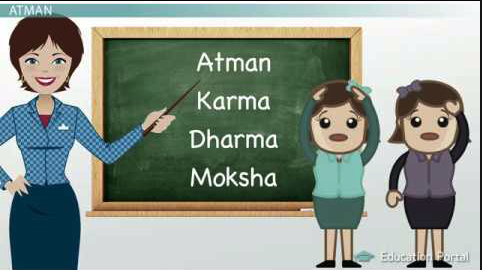
Hinduism or Sanatana Dharma (Eternal Path) is the oldest religion and it originated in the Indian subcontinent (current day India-Pakistan-Bangladesh-Afghanistan-Nepal-Bhutan). It is a sum total of various Indic philosophies and ways of life of the people in the Indian subcontinent. Even though the cultural values vary among different traditions within Hinduism, the common threads of four values binds all the traditions together:
Dharma: The law of the cosmos/true path. On an individual level, one’s personal duty.
Karma: Action (Papa and Punya)
Sansara: Cycle of life (birth-death-rebirth)
Moksha: Liberation of the soul (Atma) from Sansara (the cycle of life and death)
Other reading material:
Relevant videos:
Contributor: Swati Sugandhi
Location of this post (3f): https://www.hinduspeakers.org/ufaqs/how-is-hinduism-defined/
Category:
03. General
There are over a billion Hindus. One out of seven people on this planet is a Hindu.
1. Let’s start with Who is God? To seek God, you do not have to look outside but inside–to our soul or atman–is God. You do not realize your inner beauty because of your ego, greed, and trying to impress others. Remember, the day that inner spirit leaves you, you are worthless and only the dead body remains, at best the prettiest dead body.
2. Hindus believe in reincarnation; death is not an end but the soul moves to a new body. A tree doesn’t die but it goes back to where it came from, that is dirt, elements and water. In its place, a new tree will come.
3. On how to pray? Hindus have many ways to unite or yoga with divinity, like meditation—Raja Yoga, knowledge—Gnana Yoga, service to others—Karma Yoga and the most popular being the Bhakti Yoga which is devotional in nature.
4. Where is god? God is omnipresent. Namaste means I see divine in you and bow to you. Further, God is present in animals, plants, mother earth, sun and moon.
5. We do not have doctrines, like “thou shall not eat beef.” As an example, Hinduism teaches us to minimize violence – in practice, and even in thought. It teaches us that animals have equal rights on this earth. Therefore, if you feel justified to kill animals just for your taste buds, then it is your choice.
6. We have many scriptures. One popular scripture is the Bhagavad Gita and is the most well-known. It is a self-improvement guide. Gita teaches us how to be happy in this life and teaches us to do good karma.
Other reading material: https://www.hinduismtoday.com/magazine/july-august-september-2019/educational-insight-hinduism-in-a-nutshell/
Relevant videos:
Contributor: Dilip Amin
Location of this post (3g): https://www.hinduspeakers.org/ufaqs/what-are-the-main-teachings-of-hinduism-for-a-layman/
Category:
03. General
Many Hindus consider Hinduism to be a way of life. This pure, simple view has to do, in part, with Hinduism’s all-embracing quality, to accept so many variations of belief and practice into itself. But this view ignores the true distinctions between this way of life and the ways of the world’s other great religions.
If one wishes to formally convert to Hinduism, there are seven specific steps of “ethical conversion.” Those steps include 1) getting to understand the concept of Divine (know the Gods), 2) undertake study of scriptures starting with Srimad Bhagavad Gita, 3) understand concepts of Dharma and Karma, 4) severing from the former religion, 5) having a namakarana samskara (name giving ceremony), 6) choosing a Hindu name and 7) making a legal change of name. You do not have to be a born Hindu to be a Hindu.
Please check below references for additional details.
Other reading material: https://www.himalayanacademy.com/view/how-to-become-a-hindu , Acceptance of Hindu Dharma, in the Book: Vivaha Samskara, the Hindu Wedding Ceremony by Hindu Mandir Empowerment Committee ,
Relevant videos
Contributor: Dilip Amin
Location of this post (3h): https://www.hinduspeakers.org/ufaqs/how-to-be-a-hindu/
Category:
03. General
The most common misconception is that Hinduism is a religion of “many gods.” People often picture exotic images—a Goddess riding a tiger with weapons in hand—and conclude that Hindus are polytheists.
In truth, Hindus believe in one Supreme Reality. The Rig Veda declares: Ekam Sat, Viprā Bahudhā Vadanti—“Truth is One, the wise call it by many names.”
Hindus have the freedom to experience and worship this One Divine in many forms. The various Devis and Devatas are not separate Gods, but manifestations of the same God. Think of it this way: if God is the sun, the deities are like sunrays—expressions of the same source.
Another analogy is a government:
- Goddess Lakshmi represents prosperity, like the “finance department.”
- Goddess Saraswati represents knowledge, like the “education department.”
- Lord Ganesh is invoked to remove obstacles.
- Lord Krishna guides on how to live a righteous life.
For some Hindus, the connection to divinity comes not through worship at all, but through meditation—without idols (correct word is murtis), rituals, or even temples. Hinduism even makes room for agnostics and atheists, recognizing diverse spiritual journeys.
So while Hindus believe in one God, they also have the liberty to express and connect with the Divine in multiple ways.
Other common misconceptions include:
- Idol worship – Misunderstood as worship of “objects,” when in reality murtis are symbolic focal points for connecting with the Divine. (read more)
- Caste system – Often confused with Hinduism itself, though discrimination contradicts the core Hindu principle that divinity exists in everyone (sarva bhuta antaratma).(read this and references in it)
- Violence in the Gita – Lord Krishna urging Arjuna to fight is not a call to violence, but a teaching on dharma (duty), righteousness, and moral responsibility.
Contributor: Dilip Amin
Location of this post (3i): https://www.hinduspeakers.org/ufaqs/what-is-the-main-misconception-about-hinduism/
Category:
03. General
Every Hindu prayer begins with Om, the sacred sound in Hinduism that holds a lot of spiritual significance. This is followed by an invocation to Lord Ganesha, the giver of auspicious beginnings and remover of obstacles: Om Śhrī Mahāgaṇapataye Namaha.
.
These are selected Sanskrit prayers for the Welfare of the World:
- Om sarve bhavantu sukhinaha. Sarve santu niraamayaaha. Sarve bhadraani pashyantu. Maa kaschid dukha bhaag bhavet “May all beings be happy. May all beings be healthy. May all beings experience prosperity. May none in the world suffer.”
- Lokaah samastaah sukhino bhavantu “May all beings be always happy”
- Om shanti, shanti, shantihi “Om, peace, peace, peace”
Many Hindus meditate on this Sanskrit word, “Shanti,” thereby invoking inner peace and radiating the same in external circumstances.
A popular hymn chanted in times of fear, danger, and uncertainty is the Hanuman Chalisa, forty verses that glorify Lord Hanuman, the giver of strength, courage, and protection.
Advanced practitioners chant these Sanskrit mantras and stotras (devotional hymns) to seek the grace of various deities in the Hindu tradition. Chanting these prayers with utmost faith is the key to reap their full benefits. These are specifically for good health, expedited healing, and the elimination of disease:
.
Prayers to Lord Vishnu:
Om Achyuta Ananta Govindāya Namaha
Salutations to Achyuta Ananta Govinda! (These are all names of Lord Vishnu.)
Stotra: Śhrī Sudarśhana Ṣhatkam, śhloka 3
Srākārasahitam Mantram
Paṭhantam Śhatrunigraham
Sarvarogapraśhamanam
Prapadyeham Sudarśhanam
I salute Lord Sudarshana, who destroys all enemies,
and cures all diseases of those who chant his mantra “Sra”.
Stotra: Śhrīman Nārāyaṇeeyam, daśhakam 8, śhloka 13
Asmin Parātman Nanu Pādmakalpe
Tvamitthamutthāpita Padmayonihi
Anantabhūma Mama Rogarāśhim
Nirundhi Vātālayavāsa Viṣhno
Oh Supreme Lord of incomprehensible powers,
you made Lord Brahma emerge from the lotus.
Oh Lord Vishnu who has manifested in the temple of Guruvayoor,
Please cure all my diseases.
.
Prayer to Lord Shiva:
Stotra: Śhrī Vaidyanātha Aṣṭakam, śhloka 4
Prabhūtavātādi Samastaroga
Pranāśha Kartre Munivanditāya
Prabhākarendvagni Vilochanāya
Śhrī Vaidyanāthāya Namah Śhivāya
I bow to that Lord Shiva, who is the king among physicians, who cures all great diseases like rheumatism and arthritis, who is worshipped by great sages, and to whom, the Sun, Moon and God of Fire are eyes.
.
Prayer to Goddess Devi:
Stotra: Śhrī Lalitā Sahasranāmāvali, 551 & 552
Om Sarvavyādhi Praśhamanyai Namaha (Salutations to the goddess who cures all diseases)
Om Sarvamrtyu Nivāriṇyai Namaha (Salutations to the goddess who removes all types of death)
.
Prayer to Lord Kārtikeya, also known as Sharavana Bhava:
Om Śharavaṇa Bhavāya Namaha (Salutations to Lord Sharavana Bhava)
.
Prayer to Lord Rama:
Āpaduddhāraka Śhrī Rāma Stotram, śhloka 1
Āpadām Apahartāram
Dātāram Sarvasampadām
Lokābhirāmam Śhrīrāmam
Bhūyo Bhūyo Namāmyaham
I respectfully bow down again and again to Shri Rama, who removes all obstacles, blesses one with all types of wealth, and pleases all in the world.
.
Prayer to Lord Hanuman:
Āpaduddhāraṇa Hanumat Stotram, śhloka 5
Ādivyādhi Mahāmāri Grahapīḍāpahāriṇe
Prāṇāpahartre Daityānām Rāmaprāṇātmane Namaha
I prostrate before Lord Anjaneya, who is the destroyer of worries (ādhi), illnesses (vyādhi), chronic illnesses (mahāmāri), evil effects from the changes in the position of planets (grahapīḍā); he is the annihilator of demons, he is the protector of living beings.
.
Other reading material:Relevant videos: Health & Healing Mantras for Coronavirus Protection, Swami Nikhil Anand Hinduism Q & A: Does God Answer Our Prayers (this one is general on prayer, not covid)
Contributor: Lakshmi Subramanian
Location of this post (3j): https://www.hinduspeakers.org/ufaqs/what-is-hindu-prayers-for-covid-19-situations/
Category:
03. General
Who prepared this?
This questions and answers document is prepared by a group of Hindu Speakers as a source of information for them or for any one seeking information on Hinduism. There are multiple ways of answering a single question and this group is not claiming to provide all potential answers here.
Who is the target audiance?
The target audience is 9th grader Abrahamic students in American Schools but it will be useful to anyone interested in learning about Hinduism. All answers are designed to answer in about a 3 minute time frame. We have also provided links to other reading materials and video links relating to each question.
Sensitive questions
Considering Hindu speakers are invariably asked some sensitive geopolitical questions, we have included some potentially sensitive topics here to help speakers answer them from Hindu perspective. However we wish to clarify that this group is composed of Hindus but the group does not have any political affiliation.
Why there is no information in “z”?
Questions starting with “z” are being worked on now. We hope to list some 300 questions and answers below.
PDF available?
If you wish to review these questions and answers in the PDF format, here it is. However, not this is an old information and many latest updates are not included here.
Feedback?
If you have any feedback on these QAs, please write to HinduSpeakers@gmail.com. Thank you.
Return to QAs: https://www.hinduspeakers.org/faqs/
Location of this post (3K): https://www.hinduspeakers.org/ufaqs/details-on-the-qa-project/
Category:
03. General